
How AI Is Redefining the Interior Design Process in 2026
Interior design is evolving fast as AI reshapes how spaces are imagined, tested, and presented. What once took days of effort can now be explored in minutes with smarter tools.
Introduction
Interior design has always been a balance between creativity, functionality, and technical planning. Designers translate ideas into visual spaces, helping homeowners and businesses imagine how environments can look and feel. Traditionally, this process required manual sketches, mood boards, multiple revisions, and time-consuming visualization work.
In 2026, the industry is undergoing a remarkable shift. AI in interior design is transforming how concepts are created, presented, and refined. Artificial intelligence is enabling designers and homeowners to experiment with ideas faster, visualize design concepts instantly, and streamline many repetitive steps involved in the design workflow.
From AI-powered interior visualization to automated concept generation, the role of technology in design studios is expanding rapidly. Rather than replacing creativity, artificial intelligence in interior design is helping professionals focus more on strategy, aesthetics, and client collaboration while technology handles the heavy lifting.
Let’s explore how AI is redefining the interior design process and shaping the future of interior design technology.
The Rise Of AI In Interior Design
Interior design has historically relied on manual workflows that require significant time and effort. Designers typically move through several stages, including concept ideation, mood board creation, layout planning, rendering, and presentation.
With the introduction of AI interior design tools 2026, many of these stages are becoming faster and more efficient.
AI systems can analyze room images, design references, color palettes, furniture styles, and spatial layouts. Using this information, they can generate visual design suggestions and provide designers with starting points for creative exploration.
For instance, designers can now upload a photo of an empty room or an existing space and experiment with different styles such as Scandinavian, modern, minimalist, or contemporary. AI can visualize these design directions within seconds.
This ability to generate multiple concepts quickly is one of the reasons why generative AI for interior designers is becoming an essential part of modern design workflows.
RenoAi: AI Software For Faster Interior Design Visualization
RenoAI is an AI-powered interior design software that helps designers and homeowners quickly visualize design possibilities from real spaces.
The platform allows users to upload a room photo and generate interior design concepts in different styles, making early design exploration faster and easier.
Key ways RenoAI supports the design process:
- Generate design concepts from real room photos
- Explore multiple interior styles quickly
- Visualize renovation ideas before implementation
- Improve early-stage client presentations
By enabling AI-powered interior visualization, RenoAI helps speed up concept exploration while designers retain full creative control over the final design decisions.
Transforming The Traditional Interior Design Workflow
To understand the impact of AI, it helps to look at how the design process traditionally worked.
Previously, designers spent hours preparing sketches, building mood boards, sourcing references, and developing 3D renders. Each revision requested by the client meant going back to editing software and adjusting the design manually.
Today, AI design workflow optimization is changing how these steps are handled.
AI tools can help automate repetitive tasks such as generating layout variations, experimenting with color schemes, and testing furniture arrangements. Instead of manually recreating every idea, designers can quickly explore multiple design directions.
This shift represents a broader digital transformation in interior design, where technology enhances the creative process rather than slowing it down.
Designers are increasingly using AI home design software as part of their workflow to speed up ideation and visual communication with clients.
Faster Concept Development With AI
One of the most time-consuming stages in interior design is concept development. Designers need to experiment with different styles, materials, and layouts before finalizing a direction.
AI makes this stage significantly faster.
With AI-powered interior visualization, designers can generate multiple concept variations from a single room image. This allows them to compare different design approaches without spending hours building each version manually.
Instead of preparing only one concept for a client presentation, designers can now show several design directions. Clients can see how the same space might look in different styles, which improves decision-making.
This capability is especially helpful when clients struggle to visualize design ideas from sketches or verbal descriptions. AI visualizations help translate concepts into realistic images that clients can easily understand.
As a result, designers can communicate ideas more clearly and reduce the number of revision cycles required.
Enhancing Creativity Rather Than Replacing Designers
A common concern surrounding artificial intelligence in interior design is whether AI might replace designers in the future.
In reality, AI is functioning more like a creative assistant than a replacement.
Interior design involves understanding human preferences, lifestyle needs, spatial functionality, and emotional responses to design. These are complex elements that require human intuition and expertise.
AI tools can generate visual suggestions and help automate tasks, but the designer remains responsible for interpreting client requirements and shaping the final design vision.
In fact, many designers report that AI helps them become more creative. By generating quick visual explorations, designers can experiment with ideas they might not have considered otherwise.
This collaboration between human creativity and machine intelligence is one of the most important aspects of the future of interior design technology.
Improving Client Presentations And Communication
Another major advantage of AI in interior design is the ability to create clearer and more engaging client presentations.
Interior designers often face challenges when clients cannot fully visualize design concepts from floor plans or mood boards. This can lead to misunderstandings and repeated design revisions.
AI-generated visualizations help bridge this gap.
By showing realistic design concepts based on real room photos, designers can give clients a much clearer idea of how the final space might look. This improves communication and makes design presentations more impactful.
Clients feel more confident making decisions when they can see realistic design possibilities rather than abstract sketches.
As a result, many design firms are incorporating AI design process automation into their presentation workflows.
Automating Repetitive Design Tasks
Interior design includes many repetitive tasks that take time away from creative thinking. Examples include experimenting with different furniture placements, trying various color combinations, and generating multiple layout variations.
AI tools are helping automate many of these steps.
With AI design process automation, designers can generate several layout suggestions instantly. Instead of manually testing each arrangement, AI can propose alternatives that designers can review and refine.
This automation does not eliminate the designer’s role. Instead, it allows designers to focus on higher-level creative decisions.
By reducing manual work, designers can spend more time on client consultation, concept storytelling, and material selection.
Making Interior Design More Accessible
AI is also expanding access to interior design.
Traditionally, professional interior design services were mainly used for large residential or commercial projects. Many homeowners found the process expensive or difficult to access.
However, AI home design software is making design tools more accessible to everyday users.
Homeowners can now explore design ideas using simple room photos and experiment with different styles before starting renovation projects.
This does not mean professional designers are becoming unnecessary. Instead, homeowners are becoming more informed and prepared when approaching design professionals.
Designers often receive clearer project requirements when clients have already explored some design directions using AI tools.
Supporting The Digital Transformation Of Design Firms
Many design studios are adopting AI interior design tools 2026 as part of a broader digital transformation strategy.
These tools allow firms to:
Generate design concepts faster
Improve visualization quality
Streamline client presentations
Reduce manual rendering time
Experiment with design styles more easily
This shift is helping design firms scale their operations and handle more projects without compromising quality.
Technology is becoming a collaborative partner in the creative process, helping studios operate more efficiently in a competitive market.
The Role Of Generative AI In Interior Design
Generative AI is one of the most influential technologies shaping design workflows today.
Unlike traditional design software that requires manual input, generative AI systems can create visual outputs based on prompts, reference images, or style descriptions.
For interior designers, this means they can explore multiple design possibilities quickly.
For example, designers might experiment with different aesthetic directions such as modern minimalism, rustic interiors, luxury contemporary designs, or Scandinavian themes.
Generative systems allow designers to visualize these ideas rapidly, giving them a broader creative playground.
This capability is why generative AI for interior designers is gaining popularity across design studios and creative agencies.
Accuracy Of AI Design Visualizations
One question often raised about AI-generated design images is how accurate they are.
AI visualizations are generally intended to represent conceptual ideas rather than final construction drawings. They help designers and clients explore design directions, color palettes, and style concepts.
The final design still requires professional planning, measurements, material selection, and implementation.
However, AI-powered interior visualization is becoming increasingly realistic, making it easier for clients to imagine how their space could look after renovation.
This improves decision-making early in the design process and reduces uncertainty for homeowners.
What The Future Holds For AI In Interior Design
The role of AI in design will continue expanding as technology evolves.
We are likely to see deeper integration between AI design platforms, architecture tools, and project management systems. This could allow designers to move seamlessly from concept generation to detailed planning and implementation.
The future of interior design technology will likely include:
- More advanced visualization capabilities
- Smarter design recommendation systems
- Improved collaboration between designers and clients
- Faster design concept generation
- More integrated digital design ecosystems
As technology continues to mature, the collaboration between designers and AI systems will become more refined.
Rather than replacing designers, AI will continue supporting creative professionals by reducing repetitive work and enabling faster exploration of ideas.
Conclusion
The interior design industry is entering an exciting era of technological transformation. AI in interior design is redefining how spaces are conceptualized, visualized, and presented to clients.
From faster concept generation to improved design communication, artificial intelligence is streamlining many aspects of the design process.
By enabling AI design workflow optimization, these tools help designers focus more on creativity and client collaboration while technology handles repetitive tasks.
As more studios adopt AI interior design tools 2026, the design process will continue evolving toward faster, smarter, and more collaborative workflows.
Ultimately, the most powerful combination is not human creativity versus technology, but human creativity enhanced by AI innovation.
The designers who embrace this shift will be better positioned to thrive in the rapidly evolving world of digital design.
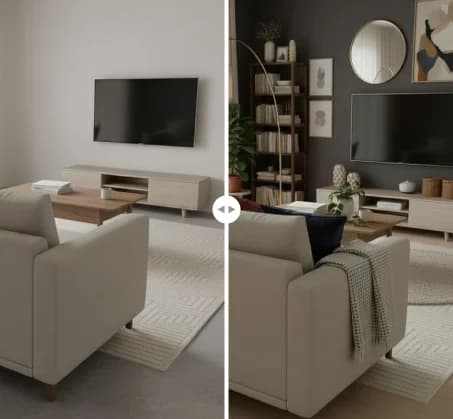
See RenoAI Come to Life in Your Space
Upload your room image and preview bold geometry, rich finishes, and timeless elegance before making any design decisions.
Preview RenoAI NowTable of Contents
- Introduction
- RenoAI: AI Software For Faster Interior Design Visualization
- Transforming The Traditional Interior Design Workflow
- Faster Concept Development With AI
- Enhancing Creativity Rather Than Replacing Designers
- Improving Client Presentations And Communication
- Automating Repetitive Design Tasks
- Making Interior Design More Accessible
- The Role Of Generative AI In Interior Design
- Conclusion

Frequently
Asked Questions
Have questions about How AI Is Redefining the Interior Design Process in 2026? We answer them here
AI speeds up interior design by generating design ideas, visualizing room styles, and automating repetitive tasks. Designers can explore concepts faster and present ideas clearly to clients.
Start Designing with RenoAI for Free
Get 50 free credits to create up to 2 AI-generated design images in just 30 seconds.
No credit card required. No long setup. Just upload your space and start visualizing instantly.

- 50 Free Credits
- Generate up to 2 images
- No credit card required

- Unlimited design exploration
- Higher usage, faster workflow
- Built for serious design needs